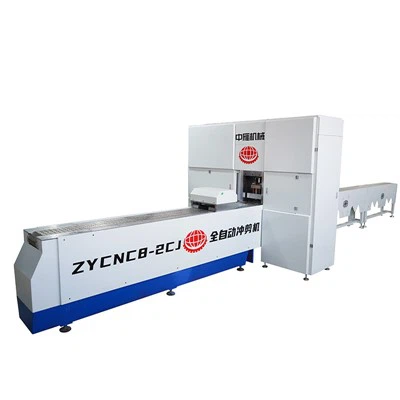
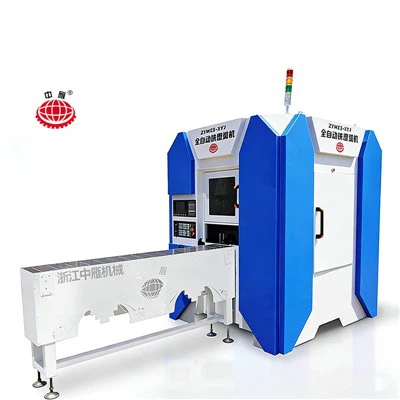
Hey there! I'm a supplier of Vertical CNC Machines, and today I wanna chat about the differences between vertical CNC machines and horizontal CNC machines. It's a topic that's super important if you're in the market for a CNC machine, so let's dive right in.
Structure and Design
First off, let's talk about the structure. A vertical CNC machine has its spindle oriented vertically. This means the cutting tool moves up and down, and it's like a big drill that can move in different directions on the X and Y axes. The workpiece is usually placed on a flat table, and the tool comes down to cut into it.
On the other hand, a horizontal CNC machine has a horizontally oriented spindle. The cutting tool moves horizontally, and the workpiece is often held in a fixture that can rotate. This setup allows for different types of machining operations, especially when you need to access multiple sides of the workpiece without re - positioning it too much.


The design of these machines also affects their footprint. Vertical CNC machines are generally more compact. They take up less floor space, which is great if you have a small workshop. You can easily fit one in a corner and still have room for other equipment. Horizontal CNC machines, however, are usually larger and require more space. They need a bigger area to accommodate the horizontal movement of the spindle and the rotation of the workpiece.
Machining Capabilities
When it comes to machining capabilities, each type has its own strengths. Vertical CNC machines are really good at drilling, tapping, and milling flat surfaces. Since the spindle moves vertically, it can easily create holes and flat cuts on the top surface of the workpiece. They're also great for jobs where you need high precision in a single plane. For example, if you're making a printed circuit board or a small part with a lot of holes, a vertical CNC machine is your best bet.
Horizontal CNC machines, on the other hand, excel at machining complex shapes and multiple sides of a workpiece. Because the spindle is horizontal and the workpiece can rotate, you can machine different faces of the part without having to re - clamp it. This reduces setup time and improves accuracy. For instance, if you're making a large engine block or a complex gear, a horizontal CNC machine can handle the job more efficiently.
Chip Management
Chip management is another important factor. In a vertical CNC machine, chips tend to fall down onto the table. This can be a bit of a problem because the chips can accumulate around the workpiece, causing damage to the surface or interfering with the cutting process. You need to have a good chip removal system, like a coolant system that flushes the chips away.
In a horizontal CNC machine, chips fall down due to gravity, and they can be easily collected in a chip conveyor. This makes chip management much easier. The chips are less likely to get in the way of the cutting tool, which means you can have a smoother machining process.
Cost
Cost is always a consideration. Generally, vertical CNC machines are more affordable. They have a simpler design and require less complex components, so they're usually cheaper to purchase. This makes them a great option for small businesses or startups that are on a tight budget.
Horizontal CNC machines, on the other hand, are more expensive. They have a more complex structure and require more advanced technology to operate. The larger size and the additional features also contribute to the higher cost. However, if you need to do high - volume production of complex parts, the investment in a horizontal CNC machine can pay off in the long run.
Applications
Let's talk about the applications of these two types of machines. Vertical CNC machines are widely used in industries such as electronics, jewelry making, and small - scale manufacturing. They're perfect for making small, precise parts. For example, in the electronics industry, they can be used to drill holes in circuit boards or mill small components.
Horizontal CNC machines are commonly used in industries like automotive, aerospace, and heavy machinery. They're ideal for machining large, complex parts. In the automotive industry, they can be used to make engine blocks, transmission components, and other large parts.
My Recommendation as a Vertical CNC Machine Supplier
As a supplier of Vertical CNC Machines, I know the value they bring. They're a great choice for those who are just starting out in the machining business or for those who have limited space and budget. But I also understand that there are situations where a horizontal CNC machine is the better option.
If you're interested in exploring more about CNC machines, you can check out some of our related products. For example, we have the CNC Busbar Processing Machine, which is a great addition to any machining setup. We also offer the High End Budget Manual Busbar Machine and the Mid Config Premium Open Busbar CNC.
If you're thinking about purchasing a CNC machine, whether it's a vertical or a horizontal one, I'd love to have a chat with you. We can discuss your specific needs, your budget, and the type of work you'll be doing. I'm here to help you make the right decision for your business.
Conclusion
In conclusion, the choice between a vertical CNC machine and a horizontal CNC machine depends on your specific requirements. If you need to do high - precision work on flat surfaces and have limited space and budget, a vertical CNC machine is a great option. If you need to machine complex parts from multiple sides and have the budget for a more advanced machine, a horizontal CNC machine might be the way to go.
If you have any questions or want to start a conversation about purchasing a CNC machine, don't hesitate to reach out. I'm here to assist you every step of the way.
References
- "CNC Machining Handbook"
- "Modern Manufacturing Technology"