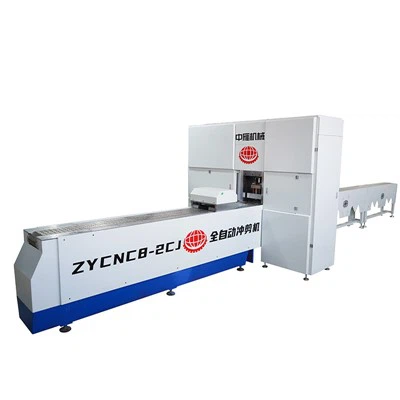
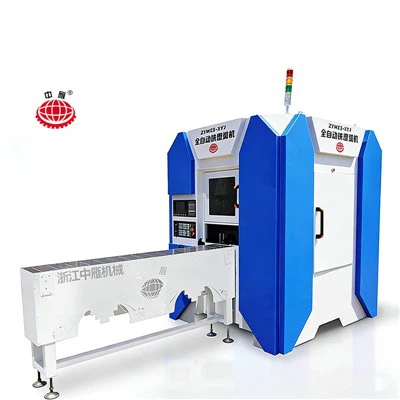
As a seasoned supplier of Special Busbar Embossing Machines, I understand the paramount importance of optimizing the embossing die design for achieving superior performance and product quality. In this blog post, I'll share some insights and strategies on how to optimize the embossing die design for our Special Busbar Embossing Machine.
Understanding the Basics of Busbar Embossing
Before delving into the details of die design optimization, it's essential to understand the fundamentals of busbar embossing. Busbar embossing is a process used to create patterns, texts, or logos on the surface of busbars, which are conductive bars used in electrical power distribution systems. The embossing process not only enhances the aesthetic appeal of the busbars but also provides functional benefits, such as improved grip and identification.
Factors Affecting Embossing Die Design
Optimizing the embossing die design requires a comprehensive understanding of the factors that influence its performance. Here are some key factors to consider:
Material Selection
The choice of material for the embossing die is crucial as it directly impacts the die's durability, wear resistance, and performance. High - quality tool steels, such as D2 or H13, are commonly used for embossing dies due to their excellent hardness and toughness. These materials can withstand the high pressures and forces involved in the embossing process without deforming or wearing out quickly.
Pattern Complexity
The complexity of the embossing pattern plays a significant role in die design. Simple patterns are generally easier to manufacture and require less complex die designs. On the other hand, intricate patterns may require advanced machining techniques and more precise die alignment. When designing the die for a complex pattern, it's important to ensure that the die can accurately reproduce the pattern on the busbar surface without any distortion or loss of detail.
Busbar Material and Thickness
The type of busbar material and its thickness also affect the embossing die design. Different materials have different mechanical properties, such as hardness, ductility, and elasticity, which can influence the embossing process. For example, softer materials may require less embossing pressure, while harder materials may need higher pressures to achieve a clear and deep emboss. Additionally, the thickness of the busbar can impact the die's design, as thicker busbars may require larger and more robust dies.
Production Volume
The expected production volume is another important consideration. For high - volume production, the die should be designed for long - term durability and minimal maintenance. This may involve using more wear - resistant materials and designing the die with features that facilitate easy replacement of worn parts. For low - volume production, a more cost - effective die design may be preferred, even if it sacrifices some durability.
Strategies for Embossing Die Design Optimization
Precision Machining
Precision machining is the foundation of a well - designed embossing die. Using advanced CNC machining techniques, we can ensure that the die is manufactured to the highest accuracy, with precise dimensions and smooth surfaces. This not only helps in achieving a clear and consistent emboss but also reduces the risk of die failure due to misalignment or uneven wear.
Simulation and Testing
Before manufacturing the actual embossing die, it's advisable to use simulation software to predict the embossing process. Simulation can help in identifying potential issues, such as stress concentrations, material flow problems, or pattern distortion. By making adjustments to the die design based on the simulation results, we can optimize the die's performance and reduce the number of physical prototypes required. Additionally, conducting physical tests on sample busbars can provide valuable feedback on the die's performance and help in further fine - tuning the design.
Surface Treatment
Applying appropriate surface treatments to the embossing die can significantly improve its performance and durability. For example, nitriding or coating the die surface can increase its hardness, wear resistance, and corrosion resistance. These treatments can also reduce the friction between the die and the busbar, resulting in a smoother embossing process and better - quality embossed patterns.
Modular Design
A modular die design offers several advantages, especially for high - volume production or when multiple patterns need to be embossed. Modular dies consist of individual modules that can be easily replaced or interchanged, allowing for quick changes in the embossing pattern. This not only reduces downtime but also extends the overall lifespan of the die by enabling the replacement of only the worn - out modules.
Integration with Related Machines
Our Special Busbar Embossing Machine often works in conjunction with other machines in the busbar processing line, such as Busbar Cutting Machine, Bus Bar Bending Machine, and Standalone Busbar Shearing Machine. When optimizing the embossing die design, it's important to consider the seamless integration of the embossing machine with these related machines. This ensures a smooth and efficient busbar processing workflow.


Conclusion
Optimizing the embossing die design for our Special Busbar Embossing Machine is a multi - faceted process that requires a deep understanding of the various factors involved, from material selection to pattern complexity. By implementing the strategies outlined in this blog post, such as precision machining, simulation and testing, surface treatment, and modular design, we can create high - quality embossing dies that deliver outstanding performance and long - term reliability.
If you're in the market for a Special Busbar Embossing Machine or looking to optimize your existing busbar processing line, we're here to help. Our team of experts can work with you to design and manufacture custom - tailored embossing dies that meet your specific requirements. Reach out to us for a consultation and let's discuss how we can enhance your busbar production process.
References
- Jones, A. (2018). Advanced Die Design for Metal Forming. Springer.
- Smith, B. (2020). Handbook of Busbar Manufacturing Processes. Wiley.
- Chen, C., & Liu, D. (2019). Simulation - Based Optimization of Embossing Die Design. Journal of Manufacturing Science and Technology.